

Introduction
Modern vehicles are no longer just about speed and power—they are about control, safety, and comfort. One technology that plays a big role in achieving this balance is active cornering enhancement. If you have ever felt a car lean too much while taking a sharp turn, you have experienced body roll. This is where active cornering enhancement steps in to improve the driving experience.
In simple terms, active cornering enhancement is designed to reduce body roll and keep the vehicle stable during turns. Whether you drive an SUV, crossover, or luxury sedan, this system can make a noticeable difference in how your vehicle handles corners. In this article, we will explore how it works, its benefits, and why it has become an important feature in modern vehicles.
What Is Active Cornering Enhancement?
Active cornering enhancement is an advanced suspension technology that helps stabilize a vehicle while turning. It uses sensors, hydraulic systems, or electronic controls to adjust the stiffness of anti-roll bars in real time.
When a vehicle enters a corner, the system detects the movement and applies force to counteract the tilt. This keeps the car more level and improves grip on the road. Unlike traditional suspension systems, which are passive, this system actively responds to driving conditions.
How Active Cornering Enhancement Works
Real-Time Monitoring and Response
The system relies on sensors placed throughout the vehicle. These sensors track factors such as:
- Steering angle
- Vehicle speed
- Lateral acceleration
- Road conditions
When the system detects a turn, it immediately adjusts the suspension to minimize body roll.
Hydraulic or Electronic Control Systems
Depending on the vehicle, active cornering enhancement may use hydraulic actuators or electronic motors. These components apply force to the anti-roll bars, making them stiffer during cornering and more flexible during straight driving.
Integration with Other Systems
Modern vehicles often combine this technology with stability control and traction systems. This integration ensures smoother handling, especially during sudden maneuvers or emergency situations.
Benefits of Active Cornering Enhancement
Improved Stability and Control
One of the biggest advantages is better stability. The system keeps the vehicle balanced, which improves control during sharp turns and high-speed driving.
Reduced Body Roll
Body roll can make passengers uncomfortable and reduce tire grip. Active cornering enhancement significantly reduces this effect, making the ride smoother and safer.
Enhanced Driving Confidence
Drivers feel more confident when the vehicle responds precisely to steering inputs. This is especially useful on winding roads or during quick lane changes.
Better Passenger Comfort
Less body movement means passengers experience fewer jolts and sways. This makes long drives more enjoyable, particularly in larger vehicles like SUVs.
Increased Safety
By maintaining better tire contact with the road, the system improves braking and handling performance. This reduces the risk of accidents in challenging driving conditions.
Active Cornering Enhancement in Modern Vehicles
Popular in SUVs and Luxury Cars
This technology is commonly found in SUVs and premium vehicles, where higher centers of gravity make body roll more noticeable. Brands use it to deliver a more refined driving experience.
Example of Real-World Application
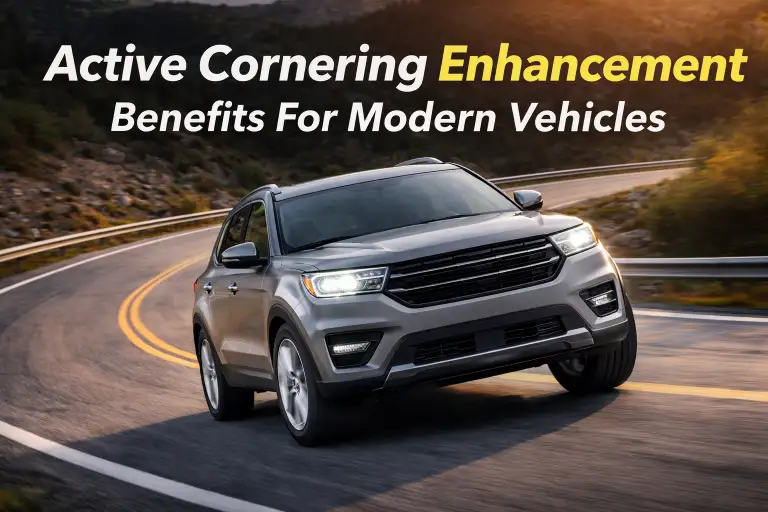
Imagine driving on a mountain road with sharp curves. A vehicle without this system may lean heavily into turns, making the driver uneasy. With active cornering enhancement, the car remains stable and predictable, allowing for smoother navigation.
Active Cornering Enhancement vs Traditional Suspension
Passive Suspension Limitations
Traditional suspension systems are designed to handle general driving conditions. However, they cannot adapt quickly to sudden changes like sharp turns.
Active System Advantages
Active cornering enhancement offers dynamic adjustments, meaning it reacts instantly to driving conditions. This provides better handling without compromising comfort.
Common Challenges and Maintenance
Higher Maintenance Costs
Since the system involves advanced components like sensors and hydraulic units, maintenance can be more expensive compared to standard suspension systems.
Potential System Failures
Like any technology, it can develop issues over time. Warning lights or unusual handling behavior may indicate a problem that needs attention.
Importance of Regular Checks
Routine inspections help ensure the system works properly. Keeping the suspension components in good condition is essential for safety and performance.
Future of Active Cornering Enhancement
The automotive industry continues to evolve, and active cornering enhancement is becoming more advanced. With the rise of electric and autonomous vehicles, this technology is expected to integrate even more closely with AI-driven systems.
Future developments may include:
- Fully electronic suspension systems
- Predictive road scanning technology
- Enhanced energy efficiency
These improvements will make vehicles safer, more comfortable, and easier to control.
Key Takeaways
- Active cornering enhancement reduces body roll during turns
- It improves stability, safety, and driving comfort
- The system uses sensors and real-time adjustments
- It is commonly found in SUVs and luxury vehicles
- Regular maintenance is important for long-term performance
FAQs
What does active cornering enhancement do?
It helps reduce body roll and improves vehicle stability during turns by adjusting the suspension in real time.
Is active cornering enhancement worth it?
Yes, especially if you drive frequently on highways or winding roads. It enhances safety, comfort, and overall driving experience.
Which vehicles have this system?
It is commonly found in SUVs, luxury cars, and performance vehicles where stability is a priority.
Does it improve fuel efficiency?
While not directly designed for fuel savings, better handling can contribute to smoother driving, which may slightly improve efficiency.
Can the system fail?
Yes, like any mechanical or electronic system, it can develop issues over time. Regular maintenance helps prevent major problems.
Is it the same as stability control?
No, but they work together. Stability control prevents skidding, while active cornering enhancement improves balance during turns.
Conclusion
Active cornering enhancement has become an important feature in modern vehicles, offering a perfect balance between comfort and control. By reducing body roll and improving stability, it enhances both safety and driving pleasure.
As automotive technology continues to advance, systems like this will play an even bigger role in shaping the future of driving. Whether you are navigating city streets or exploring winding roads, having a vehicle equipped with this technology can make every journey smoother and more confident.