

Introduction
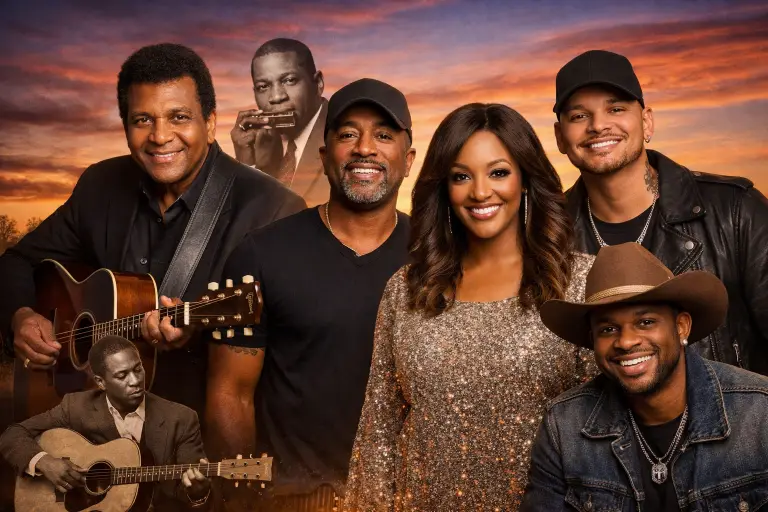
When people think of country music, they often picture a very narrow image. But the truth is far richer. Black country singers have played a powerful role in shaping the sound, history, and storytelling of country music from its earliest roots to today’s modern charts. From pioneers who were overlooked to rising stars redefining the genre, their contributions are both deep and inspiring.
In this article, we’ll explore the history, influence, and top black country singers you should know, along with how they continue to transform country music today.
The Hidden Roots of Black Country Singers
Country music didn’t appear out of nowhere—it evolved from a mix of musical traditions, including African American blues, folk, and spirituals. Instruments like the banjo, now strongly associated with country, actually have African origins.
One of the earliest black country singers, DeFord Bailey, was a harmonica player and one of the first stars of the Grand Ole Opry. His talent helped define early country sounds, yet his legacy was largely ignored for decades.
Another key figure was Lesley Riddle, who worked closely with the Carter Family, influencing many of their melodies. These early contributions show that black artists were foundational to country music, even if they weren’t always recognized.
Why Black Country Artists Were Overlooked
For many years, the country music industry was shaped by racial barriers. Record labels often categorized music by race instead of sound. Black musicians were pushed into “race records,” even if their music fit country styles.
This separation meant that many talented black country singers didn’t receive the same exposure or opportunities. Their work was often credited to others or simply forgotten.
However, the story is changing. Today, more attention is being given to these artists, both past and present, bringing long-overdue recognition.
Influential Black Country Singers You Should Know
1. Charley Pride
Charley Pride is one of the most successful black country singers in history. With over 50 No. 1 hits, he broke major barriers in the 1960s and 70s.
What made him stand out wasn’t just his race—it was his undeniable talent. Songs like “Kiss an Angel Good Mornin’” became timeless classics. Pride proved that great music can cross any boundary.
2. Darius Rucker
You might recognize Darius Rucker as the lead singer of Hootie & the Blowfish, but his country career is equally impressive. His hit “Wagon Wheel” brought him massive success in country music.
Rucker’s smooth voice and relatable storytelling helped him connect with a wide audience. He also opened doors for newer black country singers to follow.
3. Kane Brown
Kane Brown represents the modern face of country music. Blending country with pop and R&B influences, he has attracted a younger, more diverse audience.
His rise through social media platforms shows how the industry is evolving. Brown’s success highlights how black country singers are reshaping the genre for a new generation.
4. Mickey Guyton
Mickey Guyton is known for her powerful voice and meaningful lyrics. Her song “Black Like Me” sparked important conversations about race in country music.
She has become a strong advocate for diversity and inclusion, using her platform to highlight the experiences of black artists in the industry.
5. Jimmie Allen
Jimmie Allen made history with his debut single “Best Shot,” which reached No. 1 on country charts. His journey wasn’t easy—he faced years of rejection before breaking through.
Allen’s success story is a reminder of persistence and talent, and he continues to inspire upcoming black country singers.
The Rise of a New Generation
The new wave of black country singers is bringing fresh energy into the genre. Artists like Brittney Spencer and Blanco Brown are experimenting with different sounds, blending country with hip-hop, soul, and pop.
This shift reflects a broader change in the music industry. Audiences are more open than ever, and streaming platforms allow artists to reach listeners directly without traditional barriers.
As a result, country music is becoming more diverse and inclusive.
How Black Country Singers Are Changing the Genre
Black country singers are not just participating—they are transforming the genre in meaningful ways.
They are:
- Expanding musical styles by blending genres
- Bringing new storytelling perspectives
- Challenging stereotypes about country music
- Encouraging diversity within the industry
For example, songs now often explore themes like identity, social issues, and personal struggles in new ways. This evolution keeps country music relevant in today’s world.
Challenges Still Facing Black Country Artists
Despite progress, challenges still exist. Representation in radio play, award shows, and major labels remains limited.
Many black country singers have spoken about feeling like outsiders in the industry. However, awareness is growing, and more platforms are giving these artists the spotlight they deserve.
The conversation around inclusion is ongoing, and it’s helping to create a more welcoming environment.
Key Takeaways
- Black country singers have been part of the genre since its beginnings
- Early pioneers like DeFord Bailey helped shape country music
- Artists like Charley Pride and Darius Rucker broke major barriers
- Modern stars such as Kane Brown and Mickey Guyton are redefining the genre
- The future of country music is becoming more diverse and inclusive
Frequently Asked Questions
Who was the first famous black country singer?
DeFord Bailey is often considered one of the first well-known black country performers, especially through his work with the Grand Ole Opry.
Are there many black country singers today?
Yes, the number is growing. Artists like Kane Brown, Mickey Guyton, and Jimmie Allen are gaining mainstream success.
Why aren’t black country singers more common?
Historically, racial barriers limited opportunities. However, the industry is slowly becoming more inclusive.
What is the most popular song by a black country singer?
Songs like “Wagon Wheel” by Darius Rucker and “Kiss an Angel Good Mornin’” by Charley Pride are widely recognized.
Is country music originally influenced by black culture?
Yes, country music has strong roots in African American musical traditions, including blues and folk.
Conclusion
The story of black country singers is one of talent, resilience, and transformation. From early pioneers who laid the foundation to modern artists reshaping the genre, their influence is undeniable.
Country music is no longer defined by a single image or sound. It is evolving into something more inclusive, reflecting a wider range of voices and experiences. As more listeners discover these artists, the genre continues to grow stronger and more diverse.