

Introduction
In today’s fast-moving digital world, startups need more than just a good idea to succeed—they need to understand where technology is heading. The concept of major trends in technology togtechify helps simplify complex innovations and highlights the most important developments shaping modern businesses. For startups, staying updated with these trends is not optional; it’s a necessity for survival and growth.
Whether you are launching a tech startup or building a digital product, understanding these trends can help you make smarter decisions, reduce costs, and create better user experiences. In this guide, we’ll break down the most important technology trends in a clear and practical way, with real examples and insights tailored for startups.
Understanding Major Trends in Technology Togtechify
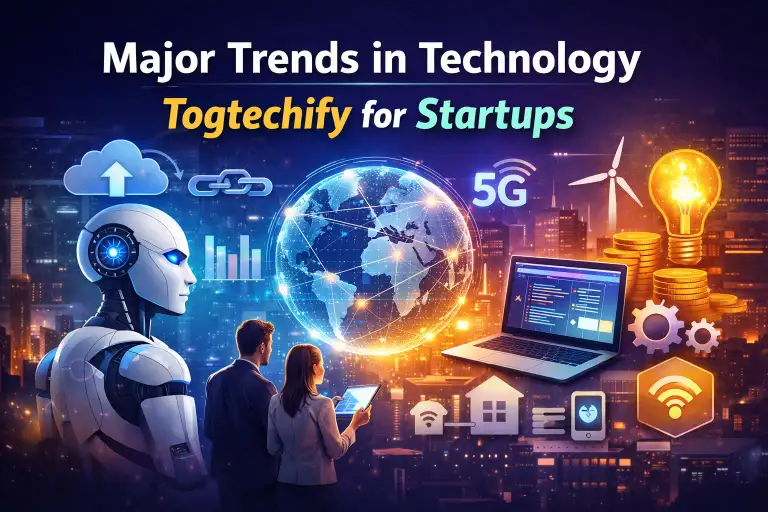
The term major trends in technology togtechify refers to key technological advancements that are transforming industries while being explained in a simplified and practical way. It focuses on helping startups and beginners understand how these trends can be applied in real-world scenarios.
Startups often operate with limited resources, so knowing which trends actually matter can save time and money. Instead of chasing every new innovation, founders can focus on technologies that offer real business value.
Artificial Intelligence and Smart Automation
Artificial Intelligence (AI) has become one of the most powerful tools for startups. It enables businesses to automate tasks, analyze data, and improve decision-making without needing large teams.
For example, many startups now use AI-powered chatbots to handle customer support. This reduces the need for human agents while providing instant responses to users. Similarly, AI tools can analyze customer behavior and suggest personalized products, improving sales and engagement.
Smart automation goes hand in hand with AI. Startups use automation tools to manage emails, marketing campaigns, and even internal workflows. This allows small teams to achieve more with fewer resources.
Generative AI and Content Creation
Generative AI is changing how startups create content. Instead of spending hours writing blog posts, designing visuals, or creating marketing materials, founders can now use AI tools to speed up the process.
For instance, a startup launching an online store can use AI to generate product descriptions, social media captions, and ad copies. This not only saves time but also ensures consistency in messaging.
However, startups must use this technology wisely. While AI can assist in content creation, human creativity and originality are still essential to stand out in a competitive market.
Cloud Computing and Scalable Infrastructure
Cloud computing has made it easier for startups to build and scale their businesses without heavy investment in hardware. Instead of setting up expensive servers, startups can use cloud platforms to store data and run applications.
This flexibility allows startups to scale quickly. For example, if a startup suddenly gains thousands of users, cloud services can handle the increased demand without system crashes.
Cloud-based tools also support remote work, enabling teams to collaborate from different locations. This has become especially important in today’s global work environment.
Internet of Things (IoT) and Smart Solutions
The Internet of Things (IoT) connects everyday devices to the internet, allowing them to collect and share data. For startups, this opens up opportunities to create smart products and services.
For example, a startup in the health industry can develop wearable devices that track fitness and health data. Similarly, smart home solutions like connected lights and security systems are becoming increasingly popular.
IoT helps startups create innovative solutions that improve convenience and efficiency in daily life.
Blockchain and Secure Transactions
Blockchain technology is not just about cryptocurrencies—it is also about secure and transparent data management. Startups in finance, healthcare, and supply chain industries are using blockchain to improve trust and security.
For example, fintech startups use blockchain to enable fast and secure transactions without relying on traditional banks. This reduces costs and increases transparency.
Another use case is in supply chain management, where blockchain helps track products from origin to delivery, ensuring authenticity and reducing fraud.
Cybersecurity and Data Protection
As startups rely more on digital platforms, cybersecurity has become a top priority. Data breaches can damage a startup’s reputation and lead to financial losses.
Modern startups are investing in strong security measures such as encryption, multi-factor authentication, and secure cloud storage. Protecting customer data is not just a technical requirement—it is a trust factor.
For example, an e-commerce startup must ensure that customer payment information is secure. Even a small security issue can result in loss of customer confidence.
5G Technology and Faster Connectivity
The rollout of 5G networks is transforming how businesses operate. With faster internet speeds and lower latency, startups can build more advanced applications and services.
For example, 5G enables real-time data processing, which is essential for technologies like autonomous vehicles and smart cities. It also improves user experiences in mobile apps, streaming, and online gaming.
Startups that rely on high-speed connectivity can benefit greatly from this advancement.
Remote Work and Collaboration Tools
The way people work has changed significantly in recent years. Startups are increasingly adopting remote work models, supported by digital collaboration tools.
Platforms for video conferencing, project management, and team communication have made it easier to manage distributed teams. This allows startups to hire talent from anywhere in the world.
Remote work also reduces operational costs, as startups no longer need large office spaces. This is especially beneficial for early-stage companies with limited budgets.
Green Technology and Sustainability
Sustainability is becoming a major focus for modern businesses. Startups are now expected to consider environmental impact while building their products and services.
Green technology includes energy-efficient systems, renewable energy solutions, and eco-friendly products. For example, startups are developing apps that help users reduce energy consumption or track carbon footprints.
Investors and customers are increasingly supporting businesses that prioritize sustainability, making it an important trend for long-term success.
Low-Code and No-Code Development
Low-code and no-code platforms are making it easier for startups to build applications without deep programming knowledge. These tools allow users to create software using visual interfaces and drag-and-drop features.
This is especially helpful for non-technical founders who want to launch products quickly. Instead of hiring large development teams, startups can build and test ideas faster and at lower cost.
For example, a startup can create a mobile app prototype using a no-code platform and test it in the market before investing in full development.
Key Takeaways
- Startups must focus on practical and impactful technology trends rather than chasing every innovation
- Artificial intelligence and automation help reduce workload and improve efficiency
- Cloud computing and low-code platforms enable faster and cost-effective development
- Cybersecurity and data protection are essential for building trust
- Sustainable and green technologies are becoming important for long-term growth
Frequently Asked Questions
What are major trends in technology togtechify?
It refers to the most important and practical technology trends explained in a simplified way, helping startups and beginners understand and apply them effectively.
Why are technology trends important for startups?
Technology trends help startups stay competitive, improve efficiency, reduce costs, and create better products for users.
Which technology trend is most useful for startups?
Artificial intelligence and cloud computing are among the most useful trends because they offer scalability, automation, and data-driven insights.
How can startups adopt new technology trends?
Startups should start small by testing tools, analyzing results, and gradually integrating technologies that provide real value to their business.
Are these trends expensive to implement?
Not necessarily. Many tools today are affordable or offer free versions, especially cloud services and no-code platforms.
Conclusion
Understanding major trends in technology togtechify is essential for startups that want to grow in a competitive digital environment. These trends are not just about innovation—they are about solving real problems, improving efficiency, and creating better experiences for users.
Startups that adopt the right technologies at the right time can gain a strong advantage. Instead of trying to follow every trend, focus on the ones that align with your goals and bring measurable results.
By staying informed and adaptable, startups can turn technology into a powerful tool for long-term success.