

Introduction
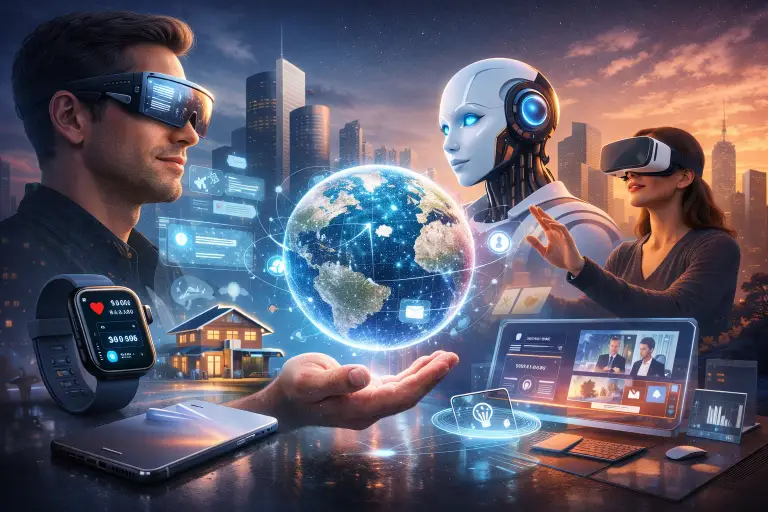
For more than a decade, smartphones have dominated how we communicate, work, and live. But now, tech giants envision future beyond smartphones as the next major shift in digital evolution. Companies like Apple, Google, Meta, and Microsoft are investing heavily in new technologies that could eventually replace or reduce our dependence on phones. From augmented reality to wearable devices and AI-powered assistants, the future is being built right now. This article explores what that future might look like, why it matters, and how it could change everyday life.
Why Tech Giants Are Moving Beyond Smartphones
Smartphones are still powerful, but innovation in this space has slowed. Most devices today offer incremental upgrades rather than groundbreaking changes. This is one reason tech giants envision future beyond smartphones—to unlock new growth and create more immersive digital experiences.
Another key factor is user behavior. People want faster, more natural ways to interact with technology without constantly looking at a screen. Voice commands, gestures, and ambient computing are becoming more appealing.
There are also business motivations. The smartphone market is saturated, and companies are competing for the same users. By creating the next major platform, tech giants can shape the future ecosystem and maintain their leadership.
The Rise of Wearable Technology
Smart Glasses and AR Devices
One of the most promising replacements for smartphones is augmented reality (AR) glasses. These devices overlay digital information onto the real world, allowing users to interact with apps without holding a phone.
Companies like Apple and Meta are already working on advanced AR glasses. Imagine checking messages, navigating directions, or attending virtual meetings directly through your glasses. This hands-free experience is a major step toward a smartphone-free future.
Smartwatches and Health Devices
Smartwatches have already started reducing reliance on phones. They allow users to make calls, track fitness, and receive notifications independently.
Future wearable devices will go even further by monitoring health in real time, detecting diseases early, and integrating with AI systems to provide personalized insights. This shift shows how tech giants envision future beyond smartphones through seamless, body-integrated technology.
AI Assistants as the New Interface
Artificial intelligence is becoming the core of next-generation devices. Instead of opening apps manually, users can rely on AI assistants to perform tasks instantly.
Voice-based assistants like Google Assistant and Siri are evolving into more advanced systems that understand context, emotions, and user preferences. These assistants could handle scheduling, communication, and even complex decision-making without requiring a screen.
In this vision, the interface disappears. Technology becomes invisible, working in the background while users interact naturally through voice or gestures.
Mixed Reality and Spatial Computing
What Is Spatial Computing?
Spatial computing blends the physical and digital worlds, allowing users to interact with digital content as if it exists in real space. Devices like VR headsets and mixed reality platforms are leading this transformation.
Apple’s Vision Pro and similar technologies from other companies are early examples of this shift. They allow users to work, watch content, and collaborate in virtual environments.
Replacing Traditional Screens
In a future beyond smartphones, screens may no longer be limited to handheld devices. Instead, virtual screens can appear anywhere—on a wall, desk, or even in mid-air.
This approach offers more flexibility and immersion than traditional smartphones. It also supports multitasking in ways that small screens cannot.
The Role of Ambient Computing
Ambient computing refers to technology that is always present but not intrusive. Devices work quietly in the background, responding only when needed.
For example, smart home systems can adjust lighting, temperature, and security automatically. Combined with AI, these systems learn user habits and adapt over time.
Tech giants envision future beyond smartphones where computing is embedded in everyday environments rather than confined to a single device.
Challenges in Moving Beyond Smartphones
While the future looks exciting, there are several challenges that companies must overcome.
Privacy and Security Concerns
With more devices collecting data, privacy becomes a major issue. Wearables and AI assistants will have access to sensitive personal information, raising concerns about how that data is used and protected.
High Costs
New technologies like AR glasses and mixed reality headsets are currently expensive. For widespread adoption, companies must make these devices affordable for everyday users.
User Adoption
People are привыкed to smartphones, and changing habits takes time. Even if new devices are better, users may resist switching until the benefits are clear and compelling.
Real-World Examples of the Shift
Several products already hint at what the future might look like:
- Apple Vision Pro introduces spatial computing with immersive digital environments
- Meta Quest devices focus on virtual and augmented reality experiences
- Google is investing in AI-powered assistants and smart wearables
- Microsoft continues to develop mixed reality tools like HoloLens
These innovations show that the transition has already begun, even if smartphones are still dominant today.
How This Future Will Change Daily Life
The move beyond smartphones will impact nearly every aspect of life.
Communication will become more natural, with voice and visual interactions replacing typing and tapping. Work environments will shift toward virtual collaboration spaces, making remote work more immersive.
Entertainment will also evolve. Instead of watching content on a small screen, users can experience movies, games, and social interactions in fully immersive environments.
Even education and healthcare will benefit. Students can learn through interactive simulations, while doctors can use AR for more precise treatments.
Key Takeaways
- Tech companies are exploring new platforms as smartphone innovation slows
- Wearable devices and AR glasses are leading the next wave of technology
- AI assistants will become the primary way users interact with devices
- Spatial computing could replace traditional screens entirely
- Challenges like cost, privacy, and adoption still need to be addressed
Frequently Asked Questions
What does “future beyond smartphones” mean?
It refers to new technologies that could replace or reduce the need for smartphones, such as AR glasses, AI assistants, and wearable devices.
Will smartphones disappear completely?
Not immediately. Smartphones will likely remain relevant for years, but their role may decrease as new technologies become more advanced.
Which companies are leading this change?
Major players include Apple, Google, Meta, and Microsoft, all of which are investing heavily in next-generation devices.
Are AR glasses the next big thing?
Yes, many experts believe AR glasses could become the primary computing device in the future due to their hands-free and immersive capabilities.
How will AI impact this shift?
AI will act as the main interface, allowing users to interact with technology through voice and context-aware systems instead of screens.
Is this future already happening?
Yes, early versions of these technologies already exist, but widespread adoption will take time as they improve and become more affordable.
Conclusion
The idea that tech giants envision future beyond smartphones is no longer just speculation—it is actively shaping the direction of innovation. From wearable devices to AI-driven systems and immersive environments, the next generation of technology aims to make digital experiences more natural and integrated into daily life.
While smartphones will not disappear overnight, their dominance is gradually being challenged. The future will likely involve a combination of devices working together seamlessly, creating a more connected and intuitive world. For users, this means greater convenience, richer experiences, and a completely new way of interacting with technology.