

Introduction
If you’ve ever worked with product data, customer databases, or SEO content, you’ve probably seen the same brand written in multiple ways. One source might say “Adidas,” another writes “ADIDAS,” and a third uses “adidas.” This inconsistency may seem small, but it can create serious problems in reporting, analytics, and search visibility.
This is where brand name normalization rules come in. These rules help you standardize brand names so they appear consistently across all platforms. When done correctly, normalization improves data quality, makes analysis more reliable, and even supports better SEO performance.
What Are Brand Name Normalization Rules?
Brand name normalization rules are guidelines used to convert different variations of a brand name into a single, consistent format. The idea is to remove duplication and confusion caused by inconsistent spelling, formatting, or capitalization.
For example, all of these variations:
- Apple
- APPLE
- apple
Can be normalized into a single standard format like “Apple.”
This process is especially important when dealing with large datasets, eCommerce platforms, CRM systems, or search indexing, where even small differences can lead to fragmented data.
Why Brand Name Normalization Matters
Inconsistent brand names may look harmless, but they can cause real issues in both technical systems and business decisions.
Better Data Accuracy
When brand names are standardized, your data becomes cleaner. This means fewer duplicates and more reliable reports. Without normalization, you might mistakenly think you’re dealing with multiple brands when it’s actually the same one.
Improved Search and SEO Performance
Search engines rely on consistency. If your website uses multiple variations of a brand name, it can dilute your SEO efforts. Normalization ensures that search engines clearly understand your content.
Easier Data Integration
When combining data from multiple sources, mismatched brand names can break workflows. Normalization helps ensure that everything aligns smoothly.
Clear Reporting and Insights
Imagine generating a sales report where “Samsung” appears in three different formats. Normalized data ensures accurate insights and better decision-making.
Common Challenges Without Normalization
Before implementing proper rules, many businesses face recurring issues with brand names.
Duplicate Entries
The same brand may appear multiple times in your database due to slight differences in spelling or formatting.
Case Sensitivity Issues
Systems may treat “nike” and “Nike” as different entries, leading to confusion.
Special Characters and Spacing
Brand names with hyphens, dots, or spaces can vary widely, such as “H&M,” “H and M,” or “HM.”
Human Error
Manual data entry often introduces inconsistencies, especially when teams are large or distributed.
Key Brand Name Normalization Rules
To solve these issues, you need clear and practical rules. These rules should be applied consistently across all systems.
Standardize Capitalization
Choose a single format for capitalization. Most businesses prefer “Title Case,” where the first letter is capitalized, like “Nike” or “Adidas.”
Avoid mixing formats such as all caps or all lowercase unless required for branding.
Remove Extra Spaces
Ensure there are no leading, trailing, or multiple spaces within brand names. For example, “ Apple ” should be cleaned to “Apple.”
Handle Special Characters Carefully
Some brands include special characters that are essential to their identity, like “H&M” or “AT&T.” These should be preserved correctly, not removed blindly.
At the same time, unnecessary punctuation should be removed if it doesn’t add value.
Create a Master Brand List
Maintain a centralized list of approved brand names. This acts as a reference point for all systems and teams.
For example:
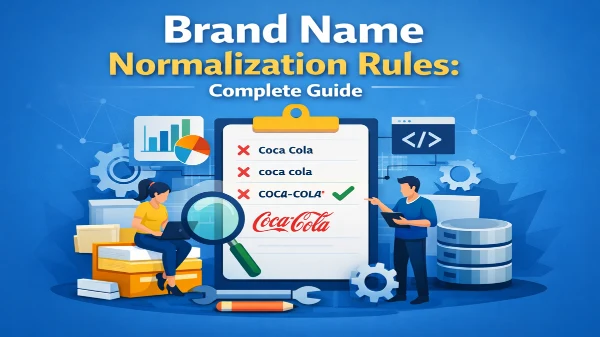
- “Coca-Cola” (approved)
- Not “Coca Cola” or “Coke” unless defined separately
Map Variations to a Standard Name
Create rules that map common variations to the correct format. For example:
- “coca cola” → “Coca-Cola”
- “nike inc” → “Nike”
This ensures all variations lead to one standardized version.
Remove Legal Suffixes (When Needed)
Depending on your use case, you may want to remove terms like:
- Inc
- Ltd
- LLC
For example, “Nike Inc.” can be normalized to “Nike” for consistency.
How to Apply Brand Name Normalization
Understanding the rules is one thing, but applying them effectively is where the real value lies.
Step 1: Audit Your Existing Data
Start by reviewing your current dataset. Identify inconsistencies, duplicates, and variations.
Step 2: Define Your Standard Format
Decide how each brand name should appear. This should be documented and shared with your team.
Step 3: Build Mapping Rules
Create a mapping system that converts variations into the standard format. This can be done manually or using automation tools.
Step 4: Use Automation Tools
If you’re working with large datasets, manual normalization isn’t practical. Tools like data cleaning software, scripts, or ETL pipelines can automate the process.
Step 5: Monitor and Update Regularly
New variations can appear over time. Regular checks ensure your normalization rules stay effective.
Real-World Example
Let’s say you run an eCommerce store and collect product data from multiple vendors. You might see entries like:
- “HP”
- “Hewlett Packard”
- “hp inc”
Without normalization, these appear as separate brands. After applying rules, all of them can be standardized to “HP,” making reporting and filtering much easier.
Best Practices for Long-Term Success
To keep your data clean over time, follow these proven practices.
Keep Rules Simple and Clear
Overly complex rules can create confusion. Stick to straightforward guidelines that are easy to apply.
Document Everything
Maintain clear documentation so everyone on your team understands how normalization works.
Train Your Team
Ensure that anyone entering or managing data follows the same standards.
Use Validation at Entry Points
Apply rules when data is entered, not just after. This prevents issues before they happen.
Key Takeaways
- Brand name normalization rules ensure consistent naming across systems
- They improve data accuracy, reporting, and SEO performance
- Common issues include duplicates, case differences, and formatting errors
- Standardization involves capitalization, spacing, and mapping variations
- Automation and regular monitoring are key for long-term success
FAQs
What is brand name normalization?
It is the process of standardizing different variations of a brand name into a single, consistent format to improve data quality and usability.
Why is normalization important for SEO?
Consistent brand names help search engines better understand your content, which can improve rankings and visibility.
Should I remove legal terms like Inc or LLC?
It depends on your use case. For general analysis or SEO, removing them often improves consistency.
Can normalization be automated?
Yes, many tools and scripts can automate the process, especially for large datasets.
How often should I update normalization rules?
You should review them regularly, especially when new data sources or brand variations are introduced.
Conclusion
Brand name normalization rules may seem like a small detail, but they have a big impact on how your data performs. From improving SEO to ensuring accurate reporting, consistent brand naming is essential in any modern data workflow.
By defining clear rules, using automation, and maintaining a centralized standard, you can eliminate confusion and unlock the true value of your data. Whether you’re running an online store, managing analytics, or optimizing content, normalization is a simple step that delivers powerful results.